The way clients hire photographers has completely changed. A decade ago, word of mouth and a strong website were often enough. Today, social media is the first stop in almost every client journey.
Before a bride fills out an inquiry form, she’s scrolling Instagram to check your wedding galleries. Before a family books a portrait session, mom is searching TikTok for “Vancouver family photoshoot ideas.” Even corporate clients double-check a headshot photographer’s credibility by looking at their LinkedIn or Instagram feed.
Social media for photographers is the new storefront. It’s where clients “window shop” before they ever talk to you. If your feed is outdated, inconsistent, or filled with content that doesn’t speak to buyers, you’re losing clients before they even inquire.
And here’s the important part. Social media isn’t about going viral anymore. The photographers who win in 2025 are the ones who:
- Show up consistently with content that builds trust.
- Use local signals that tie into SEO and Google visibility.
- Share authority-driven content that makes them the obvious choice in their market.
Your potential clients are not just looking for pretty pictures. They’re looking for proof you’re the right investment. Social media is where they decide if you feel trustworthy, professional, and established enough to handle their once-in-a-lifetime memories or their high-stakes branding.
This is why social media matters. It’s not about keeping up with trends. It’s about being present at the exact moment clients are making booking decisions.
One of the biggest mistakes photographers make is trying to show up on every single platform. They spread themselves thin, post inconsistently, and burn out. The truth is, you don’t need to be everywhere. You just need to dominate the platforms that matter for your niche and your ideal clients.
Here’s the breakdown of where to focus in 2025:
Instagram
Still the number one platform for photographers. It’s visual, local buyers actively search hashtags, and clients use it like a portfolio. Between Reels, Stories, and carousel posts, Instagram is the best place to showcase your work and build authority signals like press features, testimonials, and behind-the-scenes content.
TikTok
Exploding with younger demographics like seniors and couples. TikTok’s algorithm favors discoverability, meaning a small account can get huge reach fast. It’s also being indexed by Google, so location-based content tied to buyer-intent keywords can rank in search results.
Pinterest
A goldmine for wedding, boudoir, and inspiration-driven photographers. Brides and clients use Pinterest as a planning tool. Your posts can drive consistent website traffic for years if optimized with local SEO and niche keywords.
YouTube
The most underutilized platform for photographers. Tutorials, behind-the-scenes, and vlogs double as powerful SEO assets since YouTube videos rank in Google. Even one well-optimized video can bring in leads for years.
Facebook
Still valuable for local groups and older demographics. Family photographers, in particular, see results here because parents use community groups to ask for recommendations. Ads also work well when combined with authority-driven organic content.
The key is not to chase every platform. Pick two you can commit to and go all in. Mastering Instagram and one other platform usually delivers far more results than showing up halfway on five.
Content That Converts Clients (Not Just Followers)
Likes and follows are nice, but they don’t pay your bills. What actually fills your calendar is content that builds trust, authority, and desire to book. The photographers who win on social media aren’t posting randomly — they’re posting with intent.
Here are the content types that actually move followers into paying clients:
Behind-the-Scenes Content
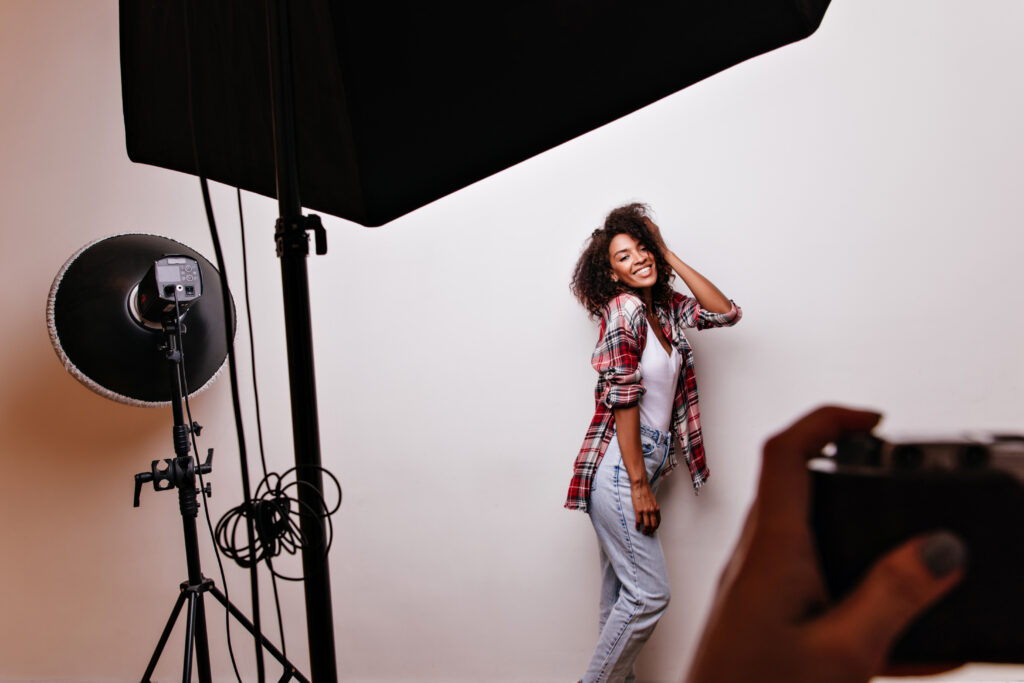
Show what it feels like to work with you. A Reel of you guiding poses, setting up lighting, or laughing with clients does more than show your skill — it shows your personality. Clients book experiences, not just images, and BTS makes them feel comfortable before they ever inquire.
Client Stories and Testimonials
Testimonials and client spotlights act as proof that you deliver on your promises. Share how a family felt during their beach session, or how a business owner leveled up their brand after new headshots. Prospective clients imagine themselves in those same results.
Few things sell better than transformation. Show the raw headshot vs. the polished branding portrait, or the “before the boudoir session” vs. the confident final reveal. For families, you can even show “before wall art” vs. the finished piece hanging proudly at home. These posts communicate value in a way no caption ever could.
Educational Content
Position yourself as the expert. Create quick tips on what to wear, how to prepare kids for family photos, or why professional headshots matter. This not only provides value but makes you the go-to authority in your niche.
Authority Content and PR Features
This is the content almost no photographer uses, but it’s one of the most powerful. Share your magazine features, awards, and press mentions. A simple post with “As Seen In [Publication]” instantly separates you from competitors. It shows clients that media outlets trust you, which makes them trust you too.
When you consistently mix these types of content into your feed, you shift the focus from vanity metrics to revenue. Engagement becomes less about likes and more about inquiries, consultations, and booked sessions.
Most photographers think of social media as the whole marketing strategy. Post often, get noticed, and bookings will follow. But in reality, social media is just the first step in a much bigger journey your client takes before they ever hit “book now.”
Here’s how it really works in 2025:
A bride scrolling Instagram finds your Reel under #charlestonweddingphotographer. She saves it and clicks through to your profile. That’s discovery. But she didn’t book right then. Instead, the next day she Googles “Charleston wedding photographer” to compare her options. When she sees your website ranking on page one and your Google Business Profile loaded with reviews, she feels reassured. Now you’re not just visible — you’re credible.
The same happens for families, seniors, or branding clients. A mom might first see your carousel of “What to Wear for Family Photos” on Instagram. Then she talks to a friend and checks Google to confirm you’re established. A CEO might come across your headshot tips on LinkedIn but head straight to your Instagram to see your portfolio before reaching out.
Social media sparks awareness, but credibility is built across multiple touchpoints. If your feed is strong but your website or GBP is weak, you’ll lose them. If your SEO is solid but your social media feels outdated, you’ll lose them there too. The winning formula is consistency across every platform, so wherever clients check, you look like the obvious choice.
That’s why thinking about the client journey matters. Social media is the spark, not the whole fire.
Here’s a secret most photographers miss: your social media and your SEO aren’t separate worlds. They’re two sides of the same coin. When you align them, you create powerful local signals that help you dominate not only Instagram, but also Google search and even AI-generated results.
Think about how your clients search. A couple planning a wedding might scroll Instagram with #charlestonweddingphotographer, then switch to Google and type “Charleston wedding photographer.” A mom might save a Reel tagged #vancouverfamilyphotos, then a week later Google “family photographer in Vancouver.” The words are almost identical. If your social media captions, hashtags, website copy, and Google Business Profile all match, you’ll show up in both places, and that consistency builds trust.
Here’s how to create that overlap:
- Captions and Hashtags: Use buyer-intent hashtags like #charlestonheadshots or #vancouverboudoirphotography. Then mirror those phrases in your captions instead of vague descriptions.
- Website SEO: Write blogs and service pages using the same language you’re using in posts. If your Instagram says “Vancouver family photoshoot,” your site should have a page optimized for “Vancouver family photoshoot.”
- Google Business Profile (GBP): Your GBP headline and posts should also echo these same keywords. That way, Google and Instagram reinforce each other, making you more likely to appear in the map pack and search results.
- AI Search Results: Google is now pulling Instagram content into page one when the account has strong local relevance. The photographers who show up there aren’t lucky. They’re the ones using consistent buyer-intent signals everywhere.
When you connect social with SEO like this, you stop treating Instagram as just a portfolio. It becomes an SEO asset that strengthens your entire marketing system. Clients don’t just find you once. They find you everywhere.
Here’s something most photographers don’t realize. Social media isn’t always where a client finds you first, but it’s almost always where they go to decide if they should book you.
A bride might first see your name on Google or get it from a referral. Before she reaches out, she’ll pull up your Instagram to check if you’re active, professional, and consistent. A business owner might click your ad for headshots, but before they schedule a consult, they’ll look at your feed to see if your style matches their brand. Families often ask in local groups for photographer recommendations, then immediately head to social media to “do a vibe check” before contacting anyone.
In all of these cases, social media isn’t the discovery engine — it’s the conversion engine. It either confirms you’re the right choice, or it raises doubts and sends the client to a competitor.
That means your content isn’t just about looking busy online. Every post should answer an unspoken client question:
- Do I trust this photographer?
- Can I see myself in these photos?
- Does this person look like a pro or a hobbyist?
When your feed is filled with buyer-intent hashtags, before-and-after transformations, PR features, and client stories, it reassures people that they’re making the right choice. Likes don’t book clients, but credibility and consistency do.
The next time you post, stop asking “Will this get engagement?” and start asking “Will this help someone decide to book me?” That’s the real test of effective social media.
Authority Content Framework
Most photographers treat social media like a digital gallery. They post their latest session, add a caption, and hope someone notices. The problem is, every photographer does that. A portfolio alone doesn’t separate you from the competition. Authority does.
Authority content is the type of post that says, “I’m not just a photographer. I’m the trusted professional in this market.” When you mix authority content into your social media strategy, you instantly rise above hobbyists and competitors who only showcase pretty pictures.
Here are the authority content pillars every photographer should use:
- PR Features and Press Logos
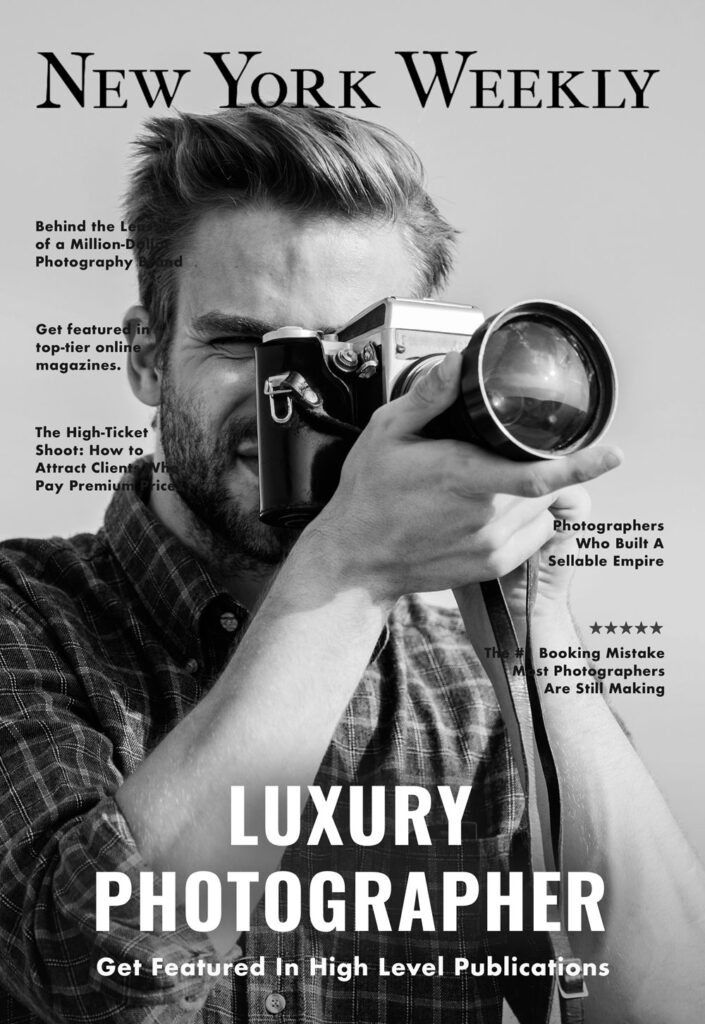
Nothing builds credibility faster than being able to say, “As seen in [Magazine].” When you earn PR features, don’t let them sit hidden on your website. Turn them into Reels, carousels, and Stories. Share behind-the-scenes of being interviewed, screenshots of the article, or the magazine cover itself. PR is the credibility booster that makes all your other posts hit harder.
- Awards and Recognition
Industry awards, local contests, or even community acknowledgments should be showcased. Clients don’t always know the difference between major and minor awards — what they see is third-party validation that you’re a trusted professional.
- High-Profile Shoots and Collaborations
Photographed at a luxury venue? Worked with a recognizable local brand? Capture behind-the-scenes and share it. These posts position you in the spaces your high-value clients aspire to be in.
- Client Transformations
Authority also comes from proof. Share before-and-after shots of branding clients who now look the part of a CEO, or boudoir clients who walked in nervous and left glowing with confidence. This type of content doesn’t just show your skill — it shows your ability to create life-changing results.
When you start layering authority content into your feed alongside your portfolio, testimonials, and tips, your social media stops looking like a hobbyist gallery and starts looking like a professional brand. Authority content is what makes people say, “This is the obvious choice.”
PR Features — The Secret Weapon Nobody Talks About
Here’s what almost nobody tells photographers about social media: the difference between a feed that gets likes and a feed that gets bookings isn’t just consistency, it’s credibility.
Likes don’t convince someone to invest thousands in a photoshoot. Authority does. And one of the fastest ways to build authority is through PR features in magazines and media outlets.
When you share “As Seen In [Magazine]” on your Instagram feed, Stories, or Reels, you instantly separate yourself from the crowd. You’re no longer just another photographer posting pretty pictures. You’re the photographer who’s been recognized by respected media. That kind of validation makes people stop scrolling and start trusting.
Think about it like this. Two photographers post the same family session. One has a caption about how fun the shoot was. The other shares the same images but includes “Recently featured in [Local Wedding Magazine] for my work with families in Charleston.” Which one would you trust more with your memories? Clients notice the difference immediately.
PR is the credibility multiplier. It makes every single piece of social content hit harder, because instead of standing alone, it’s backed by outside recognition. Pair that with testimonials, before-and-after transformations, and buyer-intent hashtags, and your social media stops being a gallery of images and becomes a booking engine.
This is why PR is one of the pillars in our Power Positioning Method. Social media gives you visibility. PR gives you credibility. Together, they create the unstoppable authority that turns followers into clients.
Want to start using PR features to turn your social media into a booking machine? Check out our PR services for photographers and learn how we can get you featured in magazines that elevate your brand.
Metrics That Actually Matter
Most photographers judge their social media by likes, follows, and views. But here’s the truth: those numbers don’t pay your bills. The photographers who actually grow their studios treat social media like a business tool, which means they track business metrics — not popularity scores.
Here are the metrics that matter most:
- Profile Visits
This is the first sign your content is doing its job. If people are clicking through to your profile, your posts are sparking curiosity. The more buyer-intent hashtags and local signals you use, the higher this number climbs.
- Website Clicks
Likes don’t matter if nobody leaves Instagram. Track how many people are clicking the link in your bio. Those clicks represent real interest, and this number tells you how well your content pushes people to take the next step.
- DM Inquiries
A DM is one of the strongest buying signals on social media. If you’re getting questions about pricing, availability, or packages, your content is converting. If you’re not, it’s time to shift your strategy toward authority-driven posts that build trust.
- Leads and Bookings
This is the ultimate metric. Track how many inquiries, consults, and paid sessions come directly from social media. Set up a system to tag leads in your CRM as “Instagram” or “Facebook” so you can measure ROI clearly.
- Content Saves and Shares
While not bookings by themselves, saves and shares show you which posts your audience finds valuable. These are leading indicators that a piece of content is building trust and will drive inquiries over time.
The big mindset shift: social media is not about likes. It’s about actions that lead to revenue. Once you stop chasing vanity numbers and start tracking business outcomes, you’ll finally see how powerful social media can be when used strategically.
One of the biggest reasons photographers give up on social media is simple — it feels overwhelming. Trying to post every day, brainstorm captions, and jump on trends quickly turns into a full-time job that steals energy from shooting and serving clients. The good news? You don’t need to live online to see results. You need a system that lets you show up consistently while only working on content once a month — or even once a quarter.
Here’s how to make social media work without burning out:
Repurpose Content Intentionally
Stop creating from scratch for every platform. Take one core piece of content and repurpose it everywhere. For example:
- Blog post → Instagram carousel → TikTok tip video → Pinterest pin → Google Business Profile post (One idea fuels a week’s worth of marketing.)
Batch Creation
Set aside one focused day per month (or even one day per quarter) to create content in bulk. Film multiple Reels in one sitting, write a batch of captions, and edit photo sets in advance. When you batch, you eliminate decision fatigue and get into flow, which makes content creation much faster.
Schedule Everything
Use scheduling tools to automate posting across platforms. Once your content is batched, load it up so it goes live without you having to think about it. This frees you from the daily grind and lets you focus on client work while your content works in the background.
Rotate Content Themes
Instead of reinventing the wheel, rotate through proven categories:
- Portfolio highlights
- Client testimonials
- Educational tips
- Behind-the-scenes
- PR features and authority content
This creates variety while giving you a repeatable system.
Quality Over Quantity
Posting daily with half-baked content is less effective than posting three times a week with strong, authority-driven posts. Consistency matters, but quality content that speaks to buyers matters more.
When you repurpose, batch, and schedule, social media stops being a chore and starts being a system. You’re no longer scrambling for what to post — you’re building authority, showing up consistently, and doing it all in a fraction of the time.
Most photographers treat social media like a showcase. Post the work, hope people like it, and wait for inquiries. That’s a missed opportunity. Social media can be a sales funnel that moves someone from follower to booked client automatically — if you set it up right.
Here’s how:
Step 1: Create a Call-to-Action Trigger
Instead of just posting a photo, ask viewers to comment with a keyword. For example:
- “Want my senior session prep guide? Comment SENIOR below.”
- “Thinking about boudoir? Comment CONFIDENCE and I’ll send you my free prep checklist.”
Step 2: Automate the Response
Use tools like ManyChat or Instagram’s native automation features to instantly send a DM when someone comments. That DM can include:
- A link to your guide or blog post.
- A special offer for booking.
- A funnel into your email list where you can nurture them further.
Step 3: Nurture and Convert
Once they’re in your DMs or on your list, you can continue the conversation with:
- Booking links.
- Testimonials.
- More educational content.
- Personalized responses that build trust.
Step 4: Track the Funnel
Every time someone engages, you’ve moved them from passive scroller to active lead. Over time, you’ll see patterns: which keywords work best, which posts generate the most leads, and which conversations convert into bookings.
Why This Works
People scrolling social media aren’t always ready to book on the spot. But they are willing to take a low-commitment action, like commenting a word. Automation bridges the gap between interest and inquiry, keeping the momentum alive until they’re ready to hire you.
How to Turn Instagram Followers Into Bookings
Getting followers is nice, but if those followers never book, it’s wasted effort. The truth is, new followers are some of the hottest leads you’ll ever have because they just discovered you, your work is fresh in their mind, and they’re curious enough to hit follow. If you don’t nurture them right away, that interest fades fast.
Here are ways to move new followers from curious to booked:
Welcome Offers That Drive Action
Set up an automation that sends every new follower a DM with a time-sensitive incentive. For example:
- “Thanks for following! To celebrate, here’s a $100 off coupon if you book a session within the next 90 days.”
- Or: “Not ready yet? Share this coupon with a friend and they can use it for their session.”
This creates urgency and encourages referrals at the same time.
Automated Nurture DMs
Tools like ManyChat can send a sequence of messages that build trust, educate, and provide value. For example:
- Welcome message with the incentive.
- Follow-up message with a link to your portfolio or blog post.
- Reminder message a few weeks later to check in about booking.
These aren’t spammy if you design them with genuine value — they feel like customer service.
Exclusive Value Drops
Instead of only offering discounts, share free resources that build your authority. Examples:
- A senior photoshoot prep guide.
- A family wardrobe planning checklist.
- A boudoir confidence-boosting tip sheet.
When you DM these resources automatically to new followers, you’re giving them immediate value while keeping your name top-of-mind.
Why This Works
Followers don’t equal clients unless you have a system that nurtures them. By treating every new follower as a potential lead and giving them either an incentive or a resource, you create momentum. Even if they don’t book right away, they’ll remember the photographer who immediately gave them value and kept in touch.
Most photographers sit back and wait for clients to come to them. They post their work, cross their fingers, and hope the algorithm does the heavy lifting. But one of the most effective ways to book sessions is by flipping the script — using social media to proactively start conversations with your ideal local clients.
When you pair outreach with genuine value, it doesn’t feel like selling. It feels like helping. And those conversations can easily turn into bookings.
Here’s how it looks in different niches:
Headshots and Branding
Search local hashtags like #charlestonrealtor or #vancouvercoach. Each day, DM 10 professionals introducing yourself and offering something valuable. Example:
- “Hi [Name], I love the work you’re doing in Charleston real estate. I offer brand audits for professionals in the area — would you like me to send you a quick guide to help level up your online presence?”
This shows authority and opens the door to a headshot or branding conversation.
Family Photography
Find local parenting influencers, boutiques, or family-centered businesses on Instagram. Send a message like:
- “Hi [Name], I created a Seasonal Mini Session Guide for local families who want updated portraits without the stress. Would you like me to send it over?”
It’s helpful, timely, and positions you as the go-to family photographer in your area.
Senior Photography
Connect with local high schools, sports clubs, or prom dress shops. Reach out to students or parents with a value offer:
- “Hi [Name], I put together a Senior Photoshoot Prep Guide for [City] students — would you like a copy?”
This approach works well because it spreads quickly through parents’ networks and friend groups.
Boudoir Photography
Search local hashtags like #vancouverwomeninbusiness or follow fitness studios and wellness coaches. DM with confidence-focused value:
- “Hi [Name], I help women celebrate their confidence through boudoir photography. I created a Boudoir Prep & Confidence Guide — would you like me to send it over?”
This is powerful because it combines empowerment with curiosity, making boudoir approachable.
Weddings
Look for local vendors like planners, florists, venues, and couples posting with engagement hashtags like #charlestonengaged. Reach out in a collaborative way:
- “Hi [Name], congrats on your engagement! I created a Charleston Wedding Venue Guide to help couples find the perfect backdrop for photos. Want me to send it to you?”
This starts the relationship and positions you as a resource, not just another vendor.
Why This Works
Outreach isn’t spam when you lead with value. Ten DMs a day = 300 conversations a month. Even if only a fraction book, that’s a steady stream of clients without waiting on algorithms. More importantly, you’re building relationships with exactly the kind of clients who are most likely to hire you and ready to invest.
Owning Your Own Local Facebook Group
Most photographers think Facebook is “dead,” but that couldn’t be further from the truth. While organic reach on business pages has dropped, Facebook Groups are thriving — especially local ones. And the smartest move isn’t just joining groups, it’s creating your own.
Imagine being the photographer who runs the most engaged local group for your ideal clients. Instead of competing for attention, you own the community where people are connecting, asking for referrals, and sharing their lives. That’s authority on autopilot.
Why a Local Group Works So Well
- Community first, sales second. Your group isn’t just about selling sessions — it’s about creating a hub for your ideal audience. For example:
- Family photographer → “Charleston Moms Creating Memories”
- Boudoir photographer → “Vancouver Women’s Confidence Collective”
- Wedding photographer → “Charleston Brides Planning Group”
- Built-in trust. Members see you as the leader, not just another vendor dropping ads.
- Endless content ideas. Every question asked in your group can be turned into a Reel, blog, or carousel post.
How to Use Your Group Strategically
- Start with a clear niche. Pick a group theme tied to your audience’s interests, not just photography.
- Provide value. Share seasonal tips, behind-the-scenes, guides, and vendor collaborations. Position yourself as a resource, not just a photographer.
- Highlight authority. Sprinkle in your press features, testimonials, and portfolio pieces to remind members you’re a trusted pro.
- Create offers. Run exclusive promotions for group members — seasonal minis, referral bonuses, or early-bird booking windows.
- Engage consistently. Ask questions, run polls, and spotlight local businesses. Engagement builds community and keeps you top of mind.
Pro Tip: Build Your Email List at the Same Time
When setting up your group, add membership questions. One of them should ask for an email address in exchange for a freebie (like a style guide, prep checklist, or mini-session planner). This way, every new member doesn’t just join your Facebook group — they also join your email list, giving you a second channel to nurture and convert them.
The Long-Term Payoff
When you own the group, you own the attention. Instead of fighting the algorithm, you control the space where your clients are hanging out. Over time, you become the obvious choice — not because you shouted the loudest, but because you built the strongest community and captured their emails for long-term follow-up.
Here’s the truth most photographers overlook: you don’t own your social media accounts. Instagram, TikTok, Facebook — they can change the algorithm, limit your reach, or even shut down your account overnight. What you do own is your email list. That’s why the smartest photographers use social media not just to showcase their work but to grow an audience they control.
Why Email Lists Are So Powerful
- You’re not at the mercy of algorithms. When you send an email, it lands directly in someone’s inbox.
- Email nurtures leads over time. Even if someone isn’t ready to book today, you can stay top of mind until they are.
- Email builds long-term value. A strong list gives you the power to launch seasonal minis, announce promotions, or fill your calendar with one send.
How to Use Social Media to Build Your List
- Lead Magnets That Solve Problems
Offer something valuable in exchange for an email. Examples:
- Family Photographer → “What to Wear for Family Photos” guide.
- Boudoir Photographer → “Confidence Prep Checklist.”
- Senior Photographer → “Senior Session Style Guide.”
- Wedding Photographer → “Top 10 Local Wedding Venues for Stunning Photos.”
- Promote It in Posts and Stories
Don’t just drop a link in your bio and hope. Use Reels, carousels, and Stories to talk about your free guide, show a sneak peek, and encourage people to grab it.
- Use Automation in DMs
Pair this with tools like ManyChat. When someone comments a keyword on your post, they instantly get a DM with a link to your freebie. It feels seamless and natural, and your list grows daily without extra effort.
- Leverage Facebook Groups
Like we covered earlier, when someone requests to join your local group, ask for their email in the membership questions in exchange for a freebie. This way, your group becomes both a community and a lead generator.
The Payoff
Every time you grow your email list, you’re building an asset that no algorithm can take away. Social media gets you discovered, but your email list keeps you booked for years to come.
Retargeting Ads: Staying Top of Mind With Interested Clients
Most photographers don’t realize how many potential clients slip away after their first interaction. Someone might watch your Reel, browse your Instagram feed, or visit your website… and then get distracted. Without follow-up, you lose them forever.
That’s where retargeting ads come in. With Facebook and Instagram ads, you can stay in front of people who have already shown interest — the warmest audience you’ll ever have.
Who You Can Retarget
- Social media profile visitors and followers → People who engaged with your content but haven’t booked yet.
- Website visitors → Anyone who clicked over from social media or Google to check out your site.
- Email subscribers → People on your list who haven’t booked, but already trust you enough to sign up.
- Past clients → Stay top of mind so they come back for yearly updates, wall art, or family milestones.
Why It Works
These people already know who you are. Retargeting isn’t about cold selling — it’s about reminding. Maybe the bride isn’t ready to book today, but when she keeps seeing your ad in her feed, she remembers you when it’s time. Maybe a mom meant to book fall minis but forgot — your retargeting ad puts you right back in her awareness.
What to Run
- Ads showcasing testimonials or PR features (authority + trust).
- Seasonal offers like mini sessions or limited-time discounts.
- Educational content like “What to Wear” guides that push them back into your funnel.
When you layer retargeting into your social media strategy, you stop letting warm leads slip through the cracks. You’re no longer invisible after the first click — you’re present, relevant, and remembered.
Up to this point, we’ve covered how to use social media for visibility, authority, and lead generation. But here’s the part most photographers miss: sales.
Likes and reach don’t pay the bills. Bookings do. And the truth is, social media is one of the most powerful sales tools you have — if you know how to use it intentionally. Instead of waiting for inquiries, you can create simple systems that turn attention into revenue.
Here are five proven ways to transform your social presence into a sales machine:
DM Sales Conversations: How to Close Without Feeling Salesy
Most photographers miss sales opportunities hiding right in their DMs. A client comments “Love this!” or “So beautiful” on a post, and the photographer just replies with a heart emoji. That’s a dead end.
The key is to start conversations, not pitches. For example:
- Someone comments on a headshot photo → reply, “Thanks so much! Are you updating your brand images this year?”
- A mom shares love on a family session → DM, “Appreciate that! Do you have family photos planned for the holidays?”
These simple questions open the door to real conversations. The photographer who engages books clients. The one who stays quiet gets scrolled past.
Using Story Polls and Stickers to Generate Warm Leads
Stories aren’t just for behind-the-scenes — they’re lead machines. Polls, quizzes, and stickers let you find out who’s interested without them even sending a DM.
Example:
- Poll: “Who’s planning family photos this fall? 🙋♀️ Yes | 🙅 Not this year.”
- Quiz: “Which Charleston wedding venue would you pick?”
- Question sticker: “Drop your 2025 wedding date and I’ll send you my top planning tips.”
Everyone who engages has essentially raised their hand. From there, you can DM them personally: “Saw you’re planning fall photos — want me to send you my available session dates?”
Call-to-Action Strategy: Every Post Should Sell
The difference between content that gets likes and content that gets bookings is the call-to-action (CTA). Every single post should tell people what to do next.
Examples:
- “DM me INFO if you’re planning a 2025 wedding.”
- “Comment GUIDE and I’ll send you my family wardrobe checklist.”
- “Click the link in bio to grab my boudoir prep guide.”
CTAs train your audience to take action, not just consume content. And they give you data — you’ll quickly see which services people are most interested in, so you know where to double down.
Social media isn’t only about finding new clients. It’s one of the best ways to upsell past clients and keep them coming back year after year.
Examples:
- After a family session, post a sneak peek and DM the client: “Would you like me to design a canvas wall art layout for your living room?”
- Around graduation season, run posts aimed at past seniors: “Time for updated headshots as you start your career!”
- Each fall, retarget past family clients with: “Time to update your portraits for holiday cards.”
Upselling is how you increase lifetime value. It’s easier to sell again to a happy client than to land a brand-new one.
Your happiest clients are your best marketers. Social media makes it easy to turn them into a referral machine.
Here’s how:
- Create a branded graphic with your client’s favorite image and a caption like: “Loved working with [Studio Name]. Mention my name for $50 off your first session.”
- Encourage clients to share it on their Stories or feed.
- Offer referral rewards like discounts, print credits, or small gifts for every new booking they send your way.
This strategy spreads trust faster than ads because it comes from a friend, not a stranger.
Why These Sales Tactics Matter
Social media isn’t just about visibility — it’s about revenue. By layering these five tactics into your strategy, you’re no longer leaving sales to chance. You’re actively creating conversations, nurturing interest, and converting clients.
Combine this with the outreach, PR, and SEO strategies we’ve already covered, and you’re not just “posting content.” You’re running a sales system that works 24/7.
Let’s compare two photographers. Both are talented. Both have beautiful portfolios. But their social media approach makes all the difference in their business.
Photographer A: No Real Strategy
Posts whenever they feel like it. Uses the same generic hashtags as everyone else. Sometimes gets a few likes, but nothing meaningful. They treat social media as a gallery instead of a sales tool. With no system in place, they only book 1–2 clients per month from Instagram — maybe $1,000–$2,000 in revenue. The rest of their feed is vanity metrics with no return.
Photographer B: Strategic System
Uses buyer-intent hashtags that align with SEO keywords. Shares behind-the-scenes clips, before-and-after transformations, and PR features that build credibility. Every new follower gets an automated DM with a prep guide or limited-time incentive. They run a local Facebook group that captures emails and positions them as the go-to expert in their city. Because their system nurtures leads and builds trust, they book 10+ clients a month directly from social — adding $8,000–$15,000 in monthly revenue.
The Difference
That’s a gap of $100,000+ per year between photographers with no strategy and those who integrate social media into a complete marketing system. The talent might be equal. The difference is strategy.
It’s easy to get caught up thinking social media is the entire marketing plan. Post consistently, grow your following, and the bookings will come. But here’s the truth: social media on its own is fragile. Algorithms change, reach fluctuates, and likes don’t always equal clients.
That’s why the photographers who scale to six and seven figures treat social media as just one piece of a larger system.
Here’s how the pieces fit together:
- Social Media = Visibility. It’s where clients discover you and get a feel for your brand.
- SEO + Google Business Profile = Authority. It’s where clients confirm you’re established and trustworthy when they search locally.
- PR Features = Credibility. Being “As Seen In [Magazine]” makes your social media posts and website instantly more persuasive.
- Email List = Ownership. Unlike borrowed platforms, your email list is yours forever — and it keeps working long after algorithms shift.
- Paid Ads = Scalability. Once you have authority and trust, ads amplify your reach and generate leads on demand.
- Retargeting = Staying Power. Even if someone doesn’t book right away, retargeting ensures you stay top of mind until they do.
We call this the Power Positioning Method. It’s the system we’ve built to help photographers dominate their markets, generate 100+ qualified leads every month, and scale into seven-figure studios.
Social media is powerful — but when it’s connected with SEO, PR, email, and ads, it stops being “just posting” and becomes a predictable client acquisition machine.
Most blogs talk about how to post, not why it actually works for photographers as a business tool. Here, we’ll pull in real numbers and data that prove social media isn’t just for likes—it’s a conversion engine.
Key Benchmarks to Know
- According to studies the average conversion rate from social media across businesses hovers around 2–5%. This means that every 100 website visitors coming from social platforms, 2–5 might take a meaningful action like filling a form or booking a session.
- More than half the global population (approximately 5.07 billion people) now uses social media, spending an average of 2 hours and 21 minutes per day scrolling and engaging, according to a Smart Insights research.
- Over 58% of consumers discover new businesses on social media, according to Sprout Social Data, and 78% of local businesses rely on social media for visibility.
- A staggering 81% of Instagram users research products or services, and 50% visit a website to book or buy after seeing them online, according to Wikipedia.
- TikTok and Instagram remain the leaders in engagement, with TikTok boasting an engagement rate of 2.5% versus Instagram’s 0.5%. This higher engagement means content can spread faster and deeper, according to Social Insider Insights.
Infusing your strategy with data proves that social media isn’t a creative hobby, it’s a serious business engine.
Social media isn’t just about pretty pictures or chasing the latest trend. When used strategically, it becomes one of the most powerful tools photographers have to attract high-value clients, build authority, and generate consistent bookings. But it’s not the whole system. The photographers who scale to six and seven figures are the ones who use social media alongside SEO, PR, email, and ads to create omnipresence in their market.
At Photographers Advantage, we’ve helped photographers across the U.S. and Canada generate 100+ qualified leads per month, dominate local visibility, and scale their studios into seven-figure businesses. And we know from experience: it’s not luck, it’s strategy.
If you’re ready to stop treating social media like a guessing game and start using it as part of a complete marketing system that books clients on repeat, it’s time to talk.
Book a marketing consultation call with Photographers Advantage today, and let’s turn your social media into a booking engine.
Frequently Asked Questions
-
How often should photographers post on social media?
Photographers should aim for 3–5 posts per week on their main platforms. Posting every day isn’t necessary if the quality suffers. Consistency is key, so plan a manageable schedule and stick with it. Use scheduling tools to plan ahead, freeing up more time for shooting and editing. This approach builds steady visibility, trust, and brand recognition without overwhelming your workflow.
-
Should photographers use personal or business accounts on Instagram?
Photographers should always use a business or creator account instead of personal. Business accounts unlock analytics, ads, and features like contact buttons. They also help potential clients view you as professional, not just a hobbyist. Access to insights like profile visits, website clicks, and engagement helps photographers see which posts are attracting inquiries. This data-driven approach allows you to refine your content and book more clients.
-
Do photographers really need TikTok for marketing?
Not every photographer needs TikTok, but it can be powerful depending on your niche. TikTok works best for senior portraits, weddings, and younger demographics that embrace short-form video trends. If you serve families or corporate clients, TikTok may not be as effective as Instagram or LinkedIn. Evaluate where your ideal clients spend time. Choosing the right platforms ensures you maximize effort, attract leads, and generate bookings consistently.
-
Is Pinterest worth it for photographers?
Pinterest is absolutely worth it for photographers in inspiration-driven niches like weddings, boudoir, and portraits. Unlike Instagram, where content disappears quickly, Pinterest pins can bring website traffic for years. Optimize your pins with local keywords such as “Chicago wedding photos” or “Vancouver boudoir inspiration.” Brides and clients actively use Pinterest to plan, so being visible there builds long-term exposure and creates steady inquiries without daily posting effort.
-
Should photographers pay for ads on social media?
Yes, but only after you’ve built a strong organic foundation. Paid ads amplify reach but can’t fix weak messaging or an inconsistent feed. Once your brand feels credible, ads work brilliantly to retarget website visitors, email subscribers, and social followers. Even a small budget can bring results by focusing on warm audiences already familiar with you. Ads paired with authority content convert consistently and drive steady bookings.
-
How can photographers measure ROI from social media?
The best way to measure ROI is to track actual bookings, not just likes. Use a CRM or booking system to tag where inquiries come from, like Instagram, TikTok, or Facebook. Calculate how many clients and how much revenue each platform generates. If you make $5,000 in a month and $2,000 came from Instagram, that’s clear ROI. Tracking ensures you’re focusing energy where results really happen.
-
What are the best social media platforms for wedding photographers?
Wedding photographers should focus primarily on Instagram and Pinterest. Brides use Instagram hashtags to find local vendors and inspiration, while Pinterest boards guide their planning. TikTok is also growing for engaged couples who want creative ideas for venues, dresses, and photoshoots. Using two platforms strategically is better than spreading yourself thin across many. Combining Instagram Reels with Pinterest boards creates both immediate visibility and long-term lead generation.
-
How do photographers balance social media with editing and client work?
The secret is batching and scheduling. Dedicate one day per month to create content, edit visuals, and write captions. Load everything into a scheduling tool like Planoly, Later, or Meta Business Suite. This allows you to post consistently without daily stress. By batching, you stay focused on editing and client sessions while still maintaining a professional, active presence that attracts clients. Balance comes from systems, not daily scrambling.
-
Do hashtags still matter on social media in 2025?
Yes, hashtags are still important, but they function differently than before. They help platforms categorize your content so it reaches the right audience. Instead of generic tags like #photography, focus on buyer-intent and local hashtags such as #newyorkweddingphotographer or #austinheadshots. These smaller, targeted tags put you in front of people ready to book. When used strategically, hashtags remain a valuable discovery tool for photographers.
-
What type of content performs best for photographers on social media?
In 2025, short-form video content like Instagram Reels, TikToks, and YouTube Shorts lead the way. Behind-the-scenes clips, transformation posts, and client testimonials perform especially well because they build trust and show your personality. Still, a balanced mix works best. Combine Reels with carousels, Stories, and educational posts to engage different types of clients. Consistent, authority-driven content is what turns casual followers into paying clients.